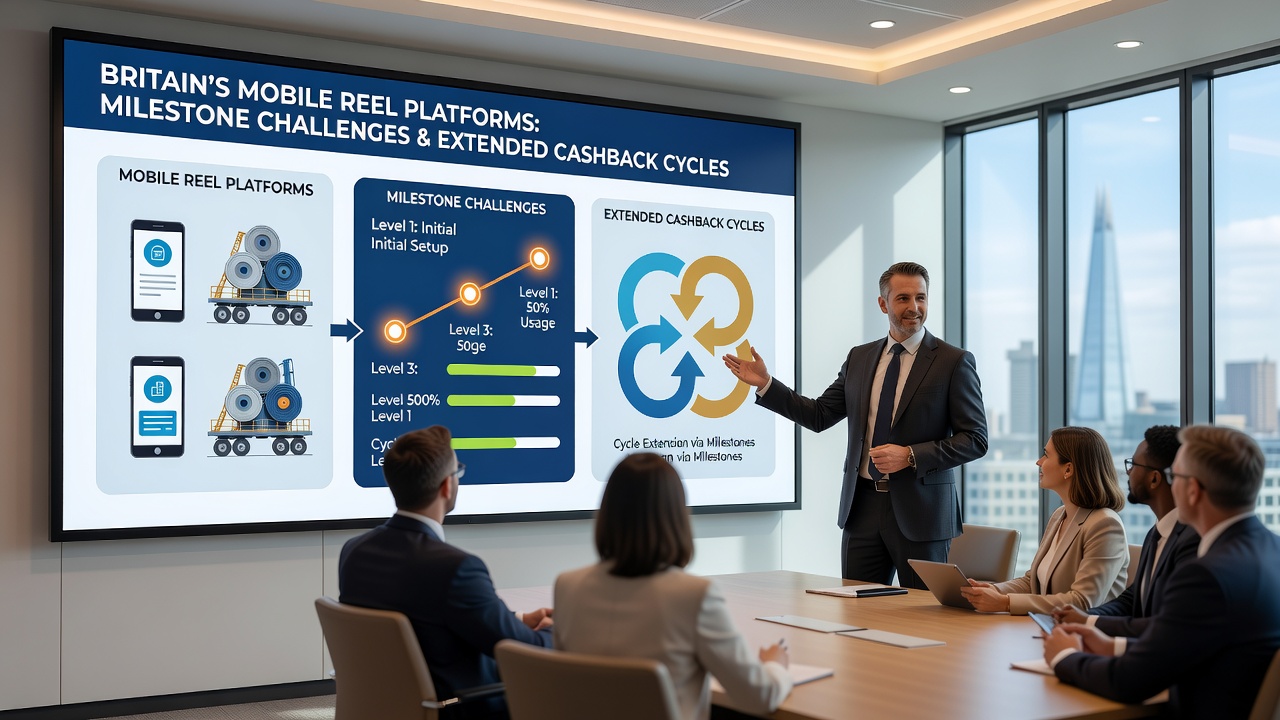
Britain's Mobile Reel Platforms and Their Use of Milestone Challenges to Extend Cashback Cycles
Britain's mobile reel platforms have incorporated milestone challenges into their cashback systems as a way to structure player engagement over longer periods. These challenges require users to complete specific sequences of spins or tasks before cashback rewards become available, which in turn stretches the duration between initial deposits and final payouts. Data from industry tracking indicates that such mechanics appear across multiple regulated apps operating in the UK market, with patterns emerging since the early 2020s and continuing into 2026.Mechanics of Milestone Integration
Milestone challenges typically divide cashback cycles into stages where players accumulate progress through defined actions such as reaching set spin counts, hitting particular symbol combinations, or maintaining consistent session lengths. Once a stage completes, the system unlocks the next portion of the cashback pool, creating a chained structure that delays full reward distribution. Observers note that this approach replaces single-cycle cashback models with multi-phase ones, where each milestone resets or extends the qualifying period for returns.
Platform operators implement these through in-app trackers that display real-time progress, often tied to daily or weekly targets. The structure means cashback eligibility depends on sustained activity across several intervals rather than isolated play sessions, which data shows correlates with extended user retention metrics on participating sites. In July 2026, updates to several major apps introduced adjustable milestone tiers that scale with deposit size, allowing platforms to tailor challenge difficulty while maintaining compliance with existing regulatory frameworks.
Impact on Cashback Cycle Duration
Studies from academic sources reveal that milestone systems can extend average cashback cycles by factors of two to three compared to flat-percentage models. For instance, a player might receive partial cashback after the first milestone at 500 spins, then additional portions after reaching 1,000 and 2,000 spins, effectively spreading returns across multiple days or weeks. This layered release prevents immediate full refunds and instead ties rewards to ongoing platform use.
Industry reports highlight how these challenges interact with cashback percentages, where higher tiers unlock only after milestone completion. The result is a feedback loop where players continue sessions to unlock pending returns, as documented in analyses from the Canadian Centre on Substance Use and Addiction. One examination of similar gamified reward structures found measurable increases in session frequency when milestones were present, with effects persisting across different regional markets including Britain.

Platform Variations Across the Sector
Different mobile reel platforms apply milestone challenges in distinct ways, ranging from spin-based targets to combination requirements involving specific game features. Some operators link milestones to multi-game participation, requiring activity across several titles before cashback advances, while others focus on single-title streaks. According to figures from the Australian Gambling Research Centre, such variations produce differing cycle lengths, with cross-game challenges often resulting in the longest extensions.
Technical implementation relies on backend algorithms that monitor play data in real time and adjust milestone thresholds dynamically based on user history. Platforms in Britain have adopted these tools to align with responsible gambling tools, incorporating optional pauses or reminders at milestone boundaries. Research indicates that these integrations maintain operational efficiency while supporting the extended cycle model without requiring manual oversight.
Data Patterns and Retention Effects
Retention statistics compiled by various trade organisations show that platforms using milestone-extended cashback experience higher repeat login rates, particularly in the 18-35 demographic. The challenges create natural checkpoints that encourage users to return within defined windows to maintain progress, which in turn sustains the cashback cycle. A 2025 sector overview noted correlations between milestone density and average session counts per active account, with denser challenge sets associated with longer overall participation spans.
External analysis from university-led projects, including work affiliated with the University of Sydney's gambling studies unit, has examined how these systems compare to traditional cashback across multiple jurisdictions. Findings point to structured milestone progression as a consistent factor in cycle extension, independent of bonus size or game variety. British platforms appear to follow similar patterns observed elsewhere, adapting the core mechanics to local player behaviours and regulatory expectations.
Conclusion
Britain's mobile reel platforms continue to refine milestone challenges as a core element of cashback design, with evidence pointing to their role in lengthening reward cycles through staged progression requirements. The approach combines technical tracking with player activity data to create interconnected phases that distribute returns over time rather than in single events. As of July 2026, these systems remain active components of many regulated applications, supported by observable trends in engagement metrics and cycle management practices across the sector.